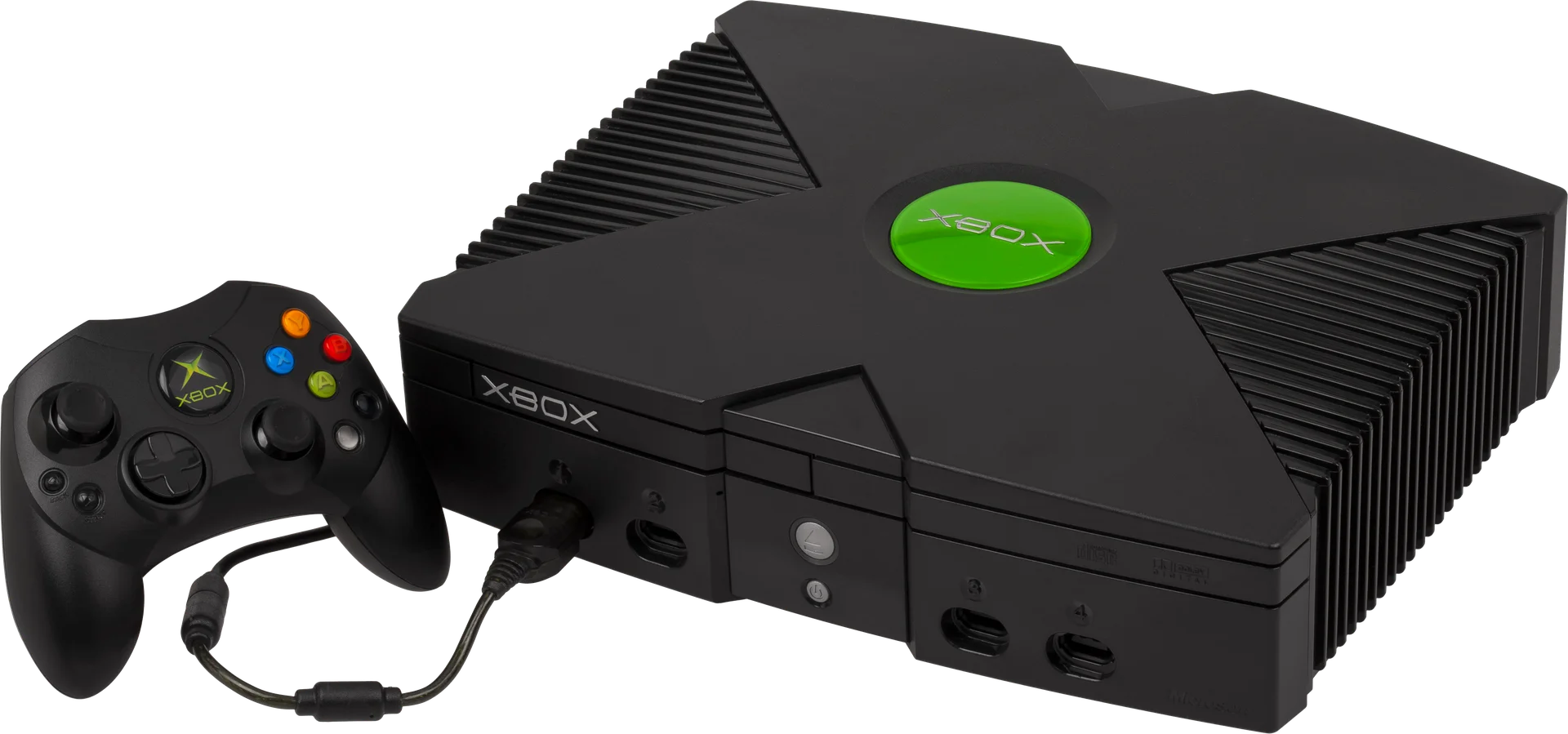
Xbox
Mechanistic · 2002–2002 · Consumer Electronics
Microsoft Xbox program work (2002): thermal architecture for a console running hotter than anything before it, plus the breakaway controller-cable safety feature that kept consoles on shelves.
Microsoft was entering the living room with a console whose Pentium III and NVIDIA NV2A together dissipated more heat than any console had previously handled — and a controller large enough that its cable could drag the console off a shelf.
Consulting engagement on the console thermal architecture and on the "Duke" controller, including its break-away cable safety feature.
A connector that separates under load instead of transmitting it to the console.
A three-month consulting engagement through Mechanistic on Microsoft’s move into the living room. Two mechanical problems, both of them consequences of putting a PC-class machine on a shelf in someone’s house.
- Thermal architecture. The Pentium III and the NVIDIA NV2A together put out heat no console had dealt with before. Console thermal design to that point had never had to move this much power out of a sealed consumer enclosure.
- Controller safety. The original controller was large, and a taut cable on a large controller is a lever. Worked the break-away cable feature: a connector designed to separate under load rather than transmit that load to the console.
Specs
- CPU: Pentium III 733 MHz
- GPU: NV2A
Lite record. This page carries what can be stated and sourced briefly. The program archive holds more — drawings, test data, and the decisions behind them — and is available on request.
This page is rendered from the canonical record for this project. The source and build system are documented in the EN-OS colophon.