SC48
Making the integrated console fit
SC48 brought the host computer, audio processing and local I/O into one live-sound console. I was brought in to work across its architecture, design, engineering and validation, and get it into manufacturing quickly. I led mechanical engineering and industrial design: the enclosure, thermal packaging, sheet-metal and plastic parts, and the physical interfaces between them. Electrical design, software, validation, sourcing and contract manufacturing were shared responsibilities.
The work was to keep those systems compatible while the design was changing. More room for cooling could change electromagnetic behavior. A side cover could change the airflow that had worked on an open test unit. Moving a control on the surface could move a connector or mounting hole on the board beneath it. The development record connects those decisions from the integrated-console brief to prototypes, tests, interface drawings and fabrication packages.
Reuse set the packaging problem
The February 2007 requirements preferred processing and I/O inside the console, while allowing a separate rack if integration proved impractical. The COGS target was below $15,000. Mechanical assumptions called for side cooling and no aluminum extrusions. Those were design targets and assumptions, not achieved production figures.
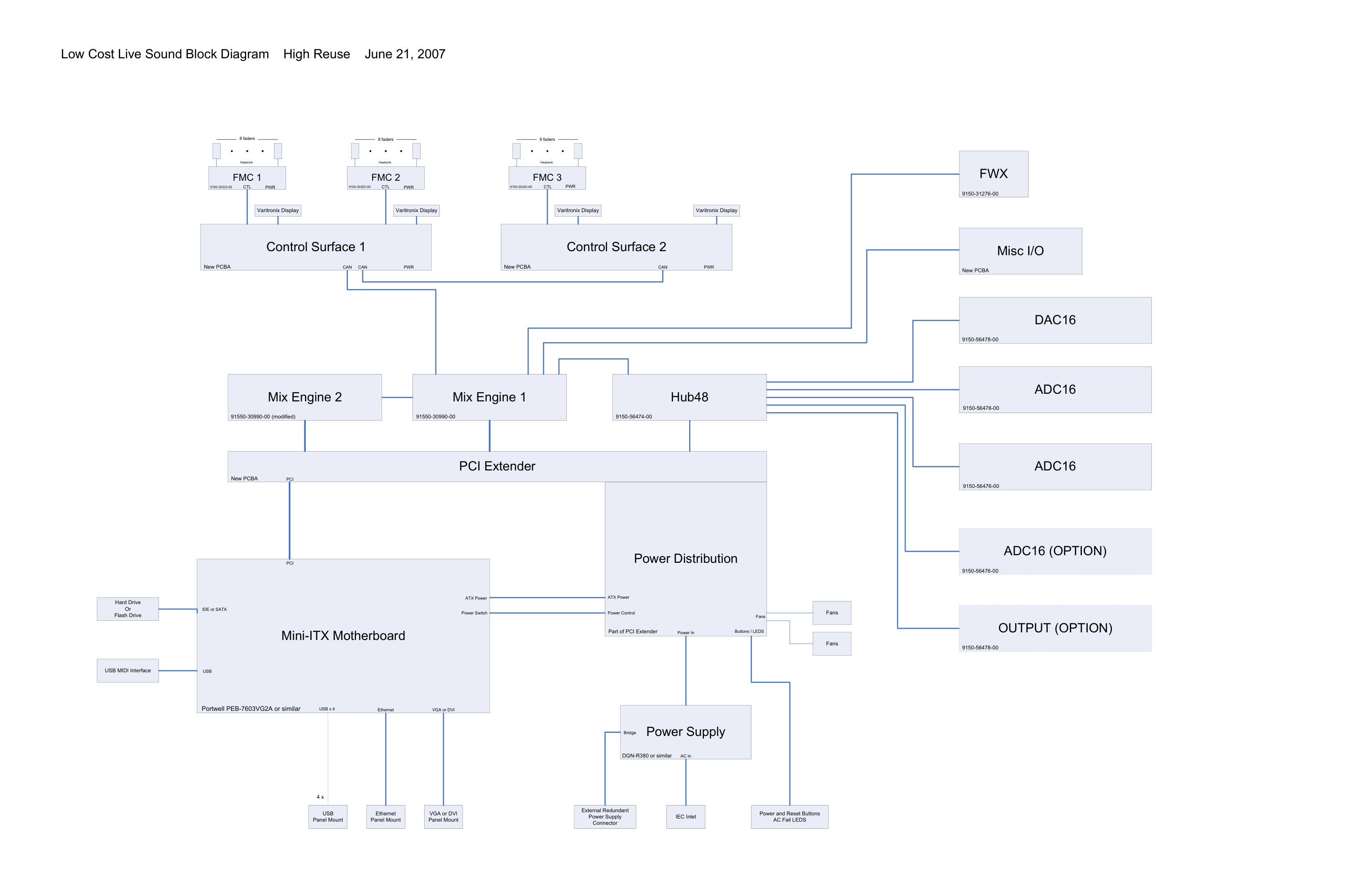
By June, a high-reuse plan placed a Mini-ITX host and PCI extender alongside mix engines, Hub48, audio I/O, control-surface electronics and power distribution. The companion board-breakout document was explicitly preliminary: it identified board sizes and stacked processing boards while the top-surface electronics were still poorly defined. Existing electronics gave the project a starting point, but their dimensions, connectors and cooling needs still had to work together inside the console.
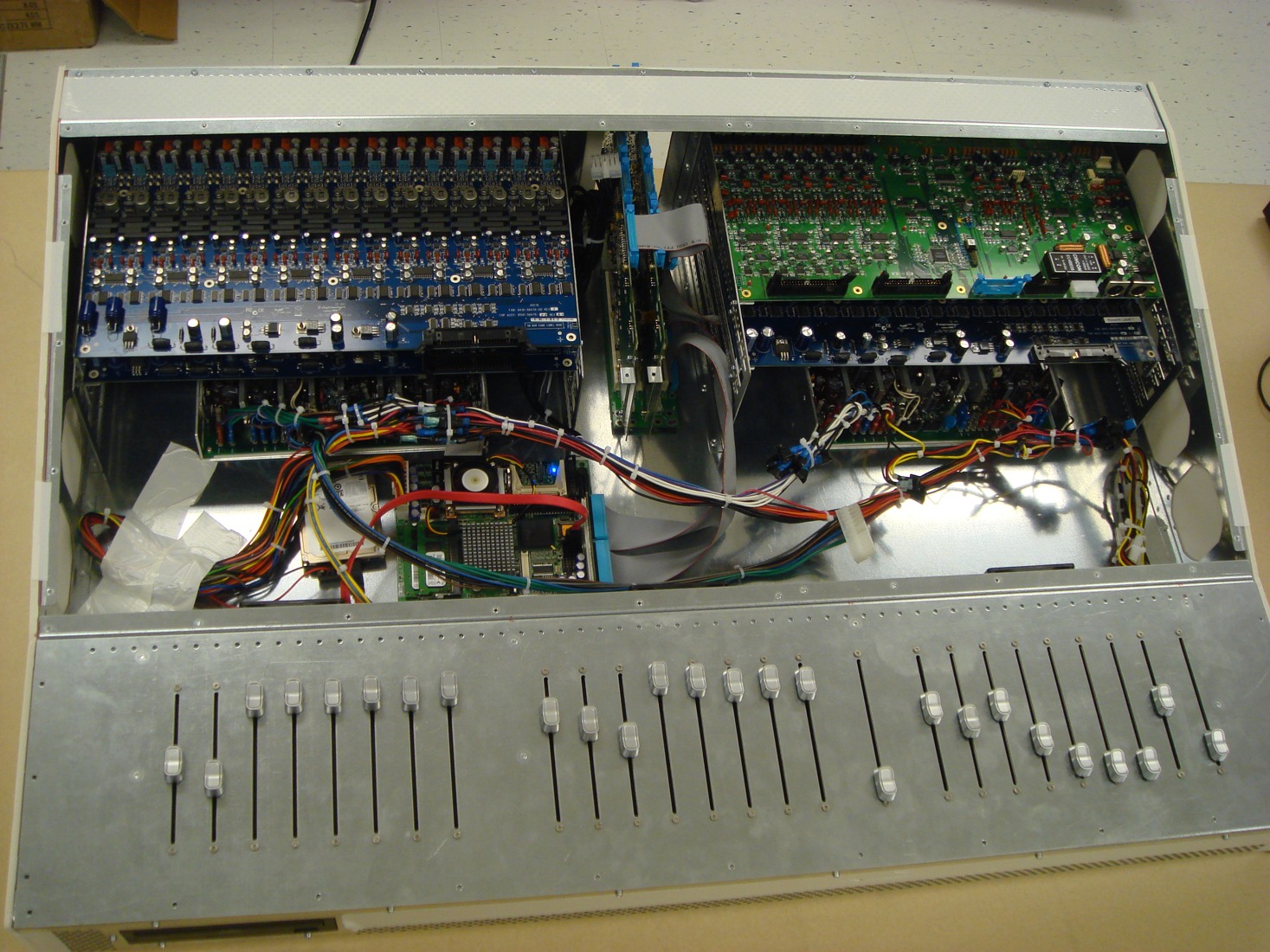
The archive’s 4U rake photographs make that challenge tangible. Beneath the sloping surface are rear board stacks, intervening metalwork, ribbon cables, power wiring and host hardware. These are photographs of development hardware, not proof of a final production arrangement. Paired with the early block diagram, they show how an architecture became a physical assembly that could be investigated.
The early high-reuse plan
June 21, 2007 planning diagram. Existing processing and I/O blocks share a package with a Mini-ITX host, PCI extender, control-surface electronics and power distribution. The diagram precedes the final configuration.
Development hardware
A 4U development assembly exposes the board stacks, metalwork and cabling beneath the sloping surface. This is development hardware; the exact shipped configuration is not established.
The enclosure was also part of the experiment
The November thermal files record an active investigation. Notes describe tilting plenums, taping an opening, moving a cable, changing vents around the ADCs and changing fan voltage during acquisition. The summary collects 17 configuration labels, with 28 populated Left/Right readings. These are not 17 independent controlled experiments.
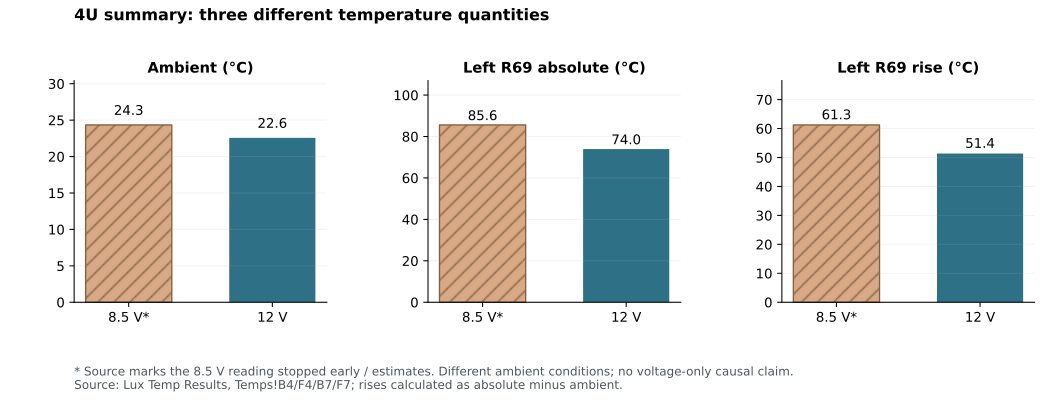
One 4U comparison uses three 80 mm fans and measures left R69. The source marks the 8.5 V record stopped early/estimates; the pair does not establish steady-state qualification.
| Measurement | Fans at 8.5 V | Fans at 12 V |
|---|---|---|
| Ambient | 24.3°C | 22.6°C |
| Left R69 rise | 61.3°C | 51.4°C |
| Left R69 absolute | 85.6°C | 74.0°C |
Compared SC48 4U configurations with three 80 mm fans at 8.5 V and 12 V: left R69 rise differed by 9.9°C and absolute temperature by 11.6°C, with differing ambient conditions. This does not isolate voltage as the cause of the full change. The 75°C log entry is an observed shutdown, not an established BIOS threshold or a basis for claiming safety margin.
The late-November report describes another 4U arrangement, with one 80 mm and one 120 mm fan, as thermally and acoustically acceptable. Preliminary electromagnetic testing still found significant noise with the power supply under the ADCs. Additional sheet metal was needed to continue EM work. Temperature had answered one part of the packaging question and exposed the need to keep investigating others.
Architecture and acceptance conditions
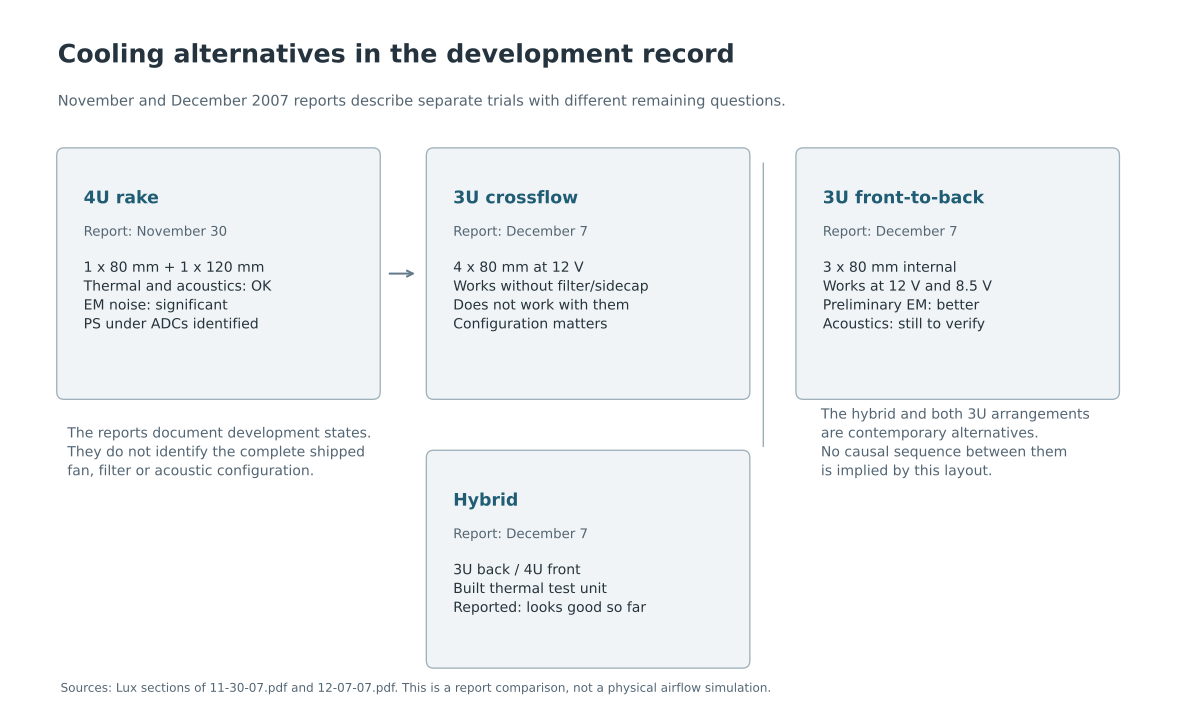
The November 30 and December 7 reports compare 4U, 3U crossflow, front-to-back and hybrid arrangements. These are reported development states, not a flow simulation or a one-way progression to a final design.
Ambient, rise and absolute temperature
Summary comparison for leftR69 with three 80 mm fans. The 8.5 V record was stopped early and is estimated. Ambient differs; these observations do not isolate voltage or demonstrate steady-state qualification.
Lower profiles and different airflow paths
December testing returned to 3U. Four-fan crossflow worked without the filter and side cover, but did not work with them fitted. Three internal 80 mm fans running front-to-back worked at 12 V and 8.5 V; preliminary EM behavior was better than the 4U arrangement, while acoustic verification was still due. A hybrid with a 3U back and 4U front was also built and reported as looking promising.
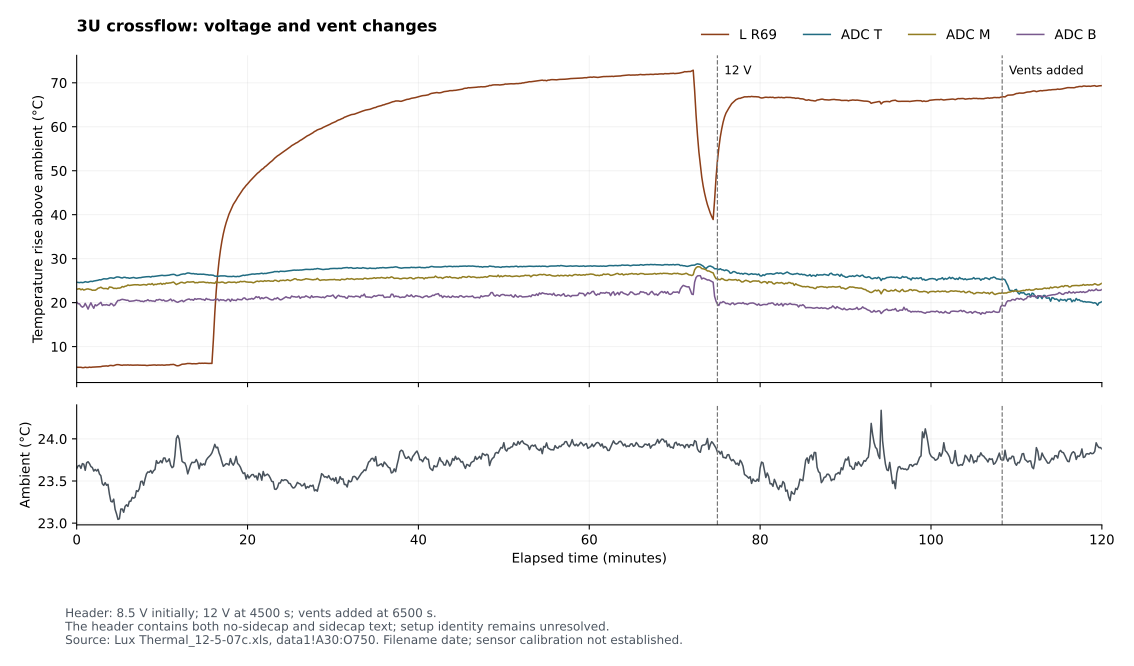
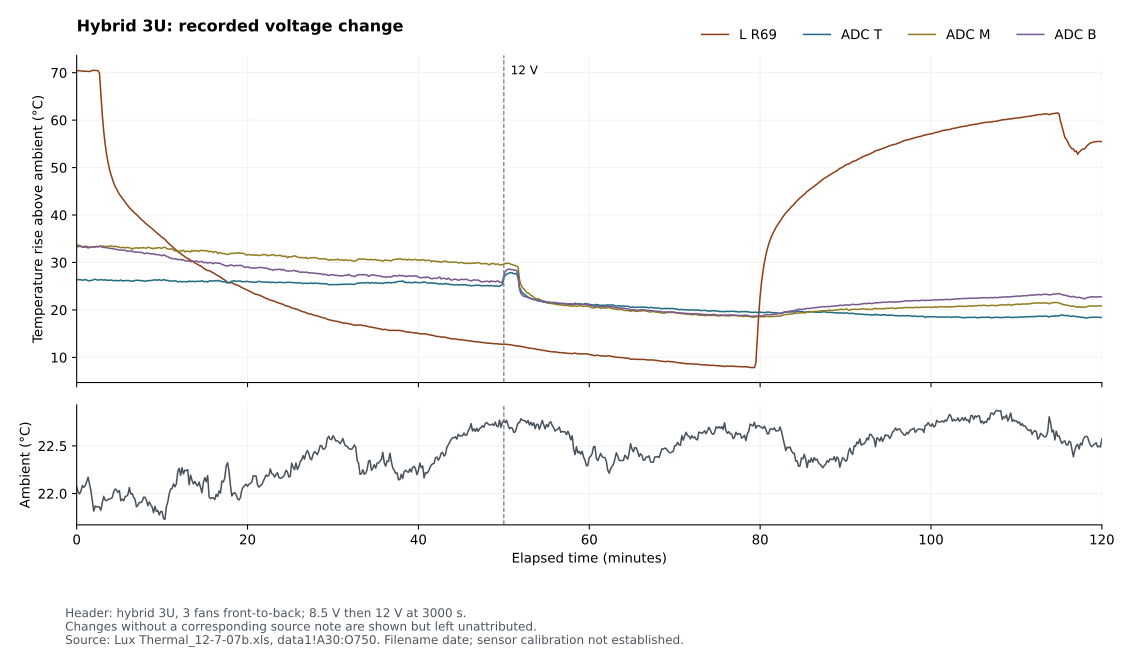
The run traces preserve the progression within those tests. The December 5 crossflow file marks a change to 12 V at 4500 seconds and added vents at 6500 seconds. The December 7 hybrid file marks 8.5 V followed by 12 V at 3000 seconds. The plotted channels show different responses, with ambient retained separately. Other abrupt transitions have no matching explanation in the notes and remain unattributed. They are visible parts of the experimental record, not grounds to invent an intervention or a clean causal gain.
The summary also deserves care. Some selected values occur in several workbooks, some setup labels conflict with the headers, and six readings do not exactly reproduce any searched 14-channel run row. Four have partial matches with unexplained numerical differences. That limits a numerical ranking of all configurations. It does not prevent explaining the documented progression: crossflow, front-to-back and hybrid arrangements were investigated against thermal, acoustic and electromagnetic behavior together.
We ultimately chose 4U because it worked. SC48 passed EMI certification and shipped. The retained source record does not establish the exact shipped fan/filter revision or final acoustic result.
Crossflow run with recorded interventions
December 5 filename-dated run: 12 V at 4500 seconds; vents added at 6500 seconds. Channel rise is separated from ambient. Side-cover labels conflict; undocumented changes and sensor calibration remain unresolved.
Hybrid run with recorded voltage change
December 7 filename-dated hybrid run: three front-to-back fans, 8.5 V then 12 V at 3000 seconds. The large later changes have no corresponding source note. Filter and side-cover conditions are not established by this header.
Airflow became a set of parts
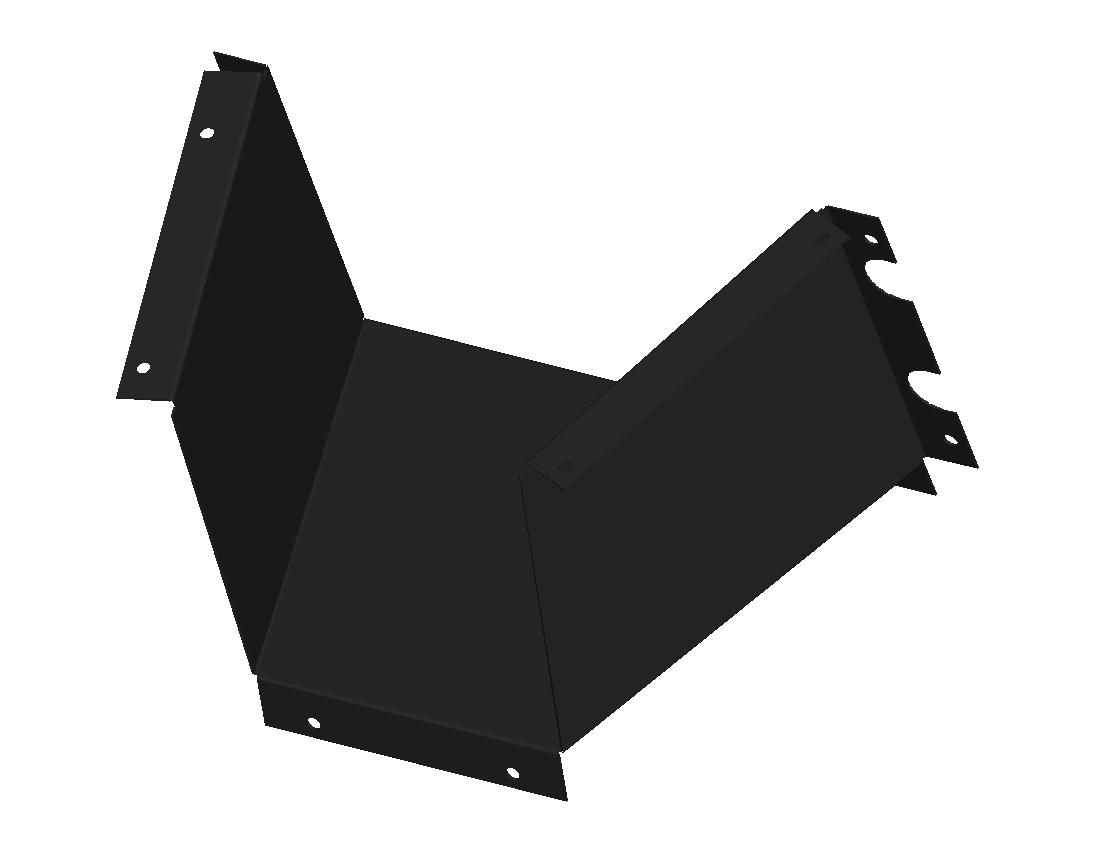
The airflow work continued into fabrication definition. The BOM revisions describe die-cut, scored and formed LDPE ducts, a reticulated-polyurethane filter and a separate PS/CPU seal. The renders show folded guidance surfaces and flat patterns, while quotation drawings define the shrouds for sourcing. These are useful views of how a flow path becomes parts with edges, attachments and surrounding interfaces; a render by itself is not measured airflow.
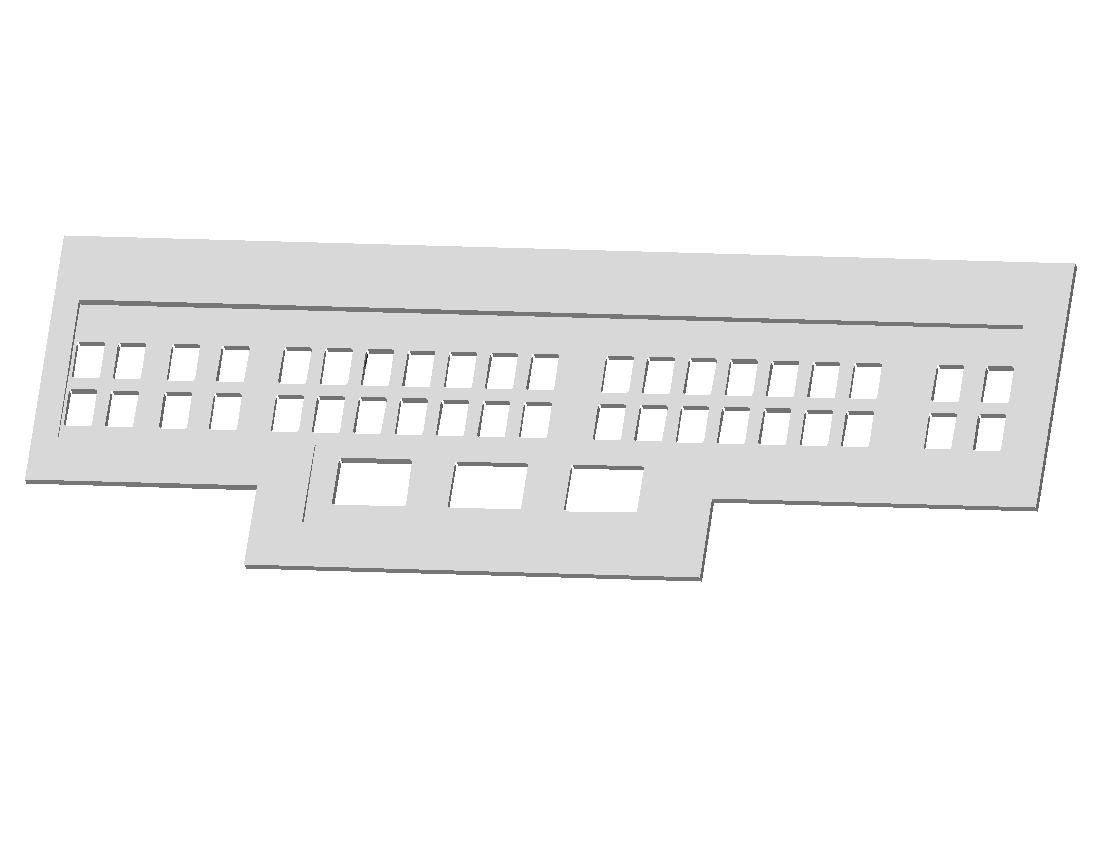
The packaging definition also considered cable passages. Retained renders show a wire guide with rectangular openings and a separate seal with narrow slits. The cost records list an injection-molded guide and die-cut rubber seal, but their quantities change from two each in REV3 to zero in REV6. These are documented options, not an identified part of the shipped airflow arrangement.
The BOM uses 9420-58856-00 and 9420-58857-00 while preliminary quotation drawings use 9440-58856-00 and 9440-58857-00. No approved crosswalk has been established. Their related descriptions and geometry support discussing the duct family, but they do not establish one final production kit or justify silently changing either identity.
February reporting records the duct/filter package going out for quotation, corrected metal documentation delivered for sourcing, and continued work on motherboard placement and CPU ducting. A quote, a prototype drawing and a released production assembly are different states in that process.
Formed airflow guidance
Folded duct render. The BOM identifies this family as 9420-58856-00; the historical image filename and preliminary quotation drawing use 9440-58856-00. The BOM and drawing records describe formed LDPE ducting, but no approved part-number crosswalk or final production configuration is established. The render shows geometry, not measured airflow.
Cable passages and a separate seal
Wire-guide and seal renders retained with the thermal-study family. The BOMs describe an injection-molded guide and die-cut rubber seal, both still numbered to be determined; quantity is two each in REV3 and zero in REV6. These views show component geometry, not measured airflow or an established shipped arrangement.
Surface decisions reached the boards
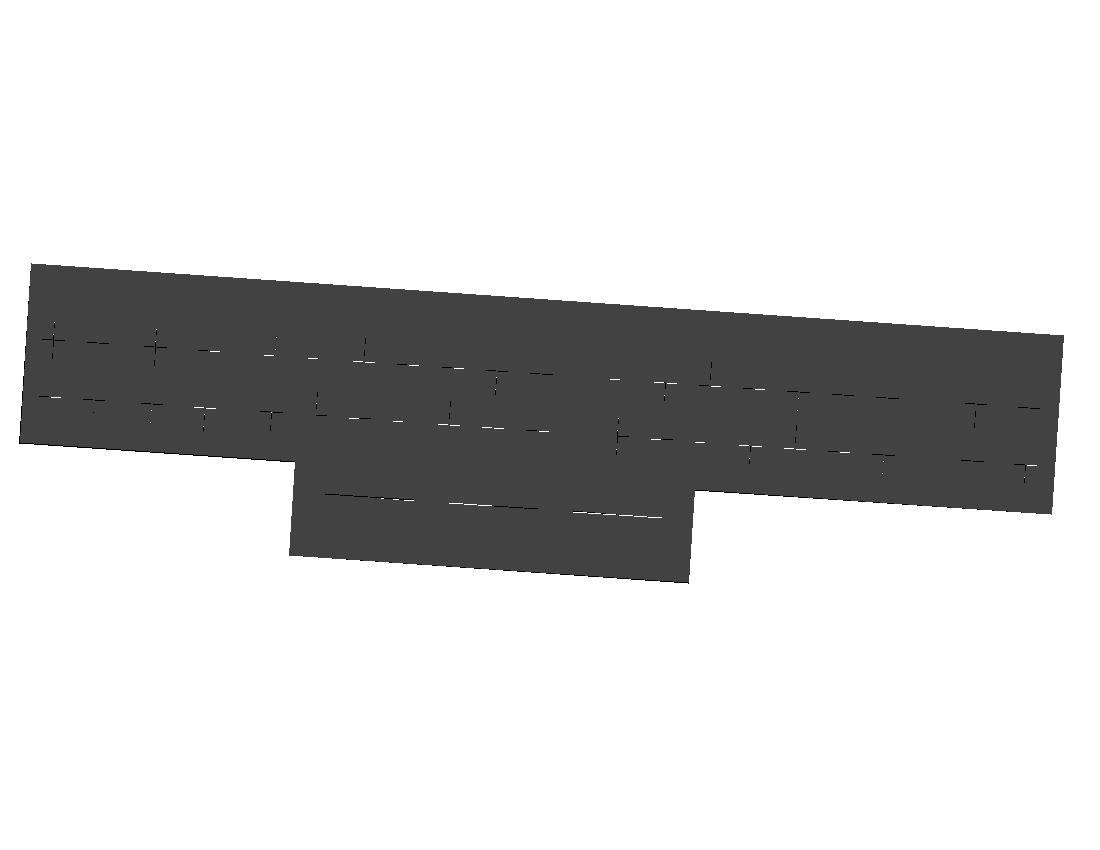
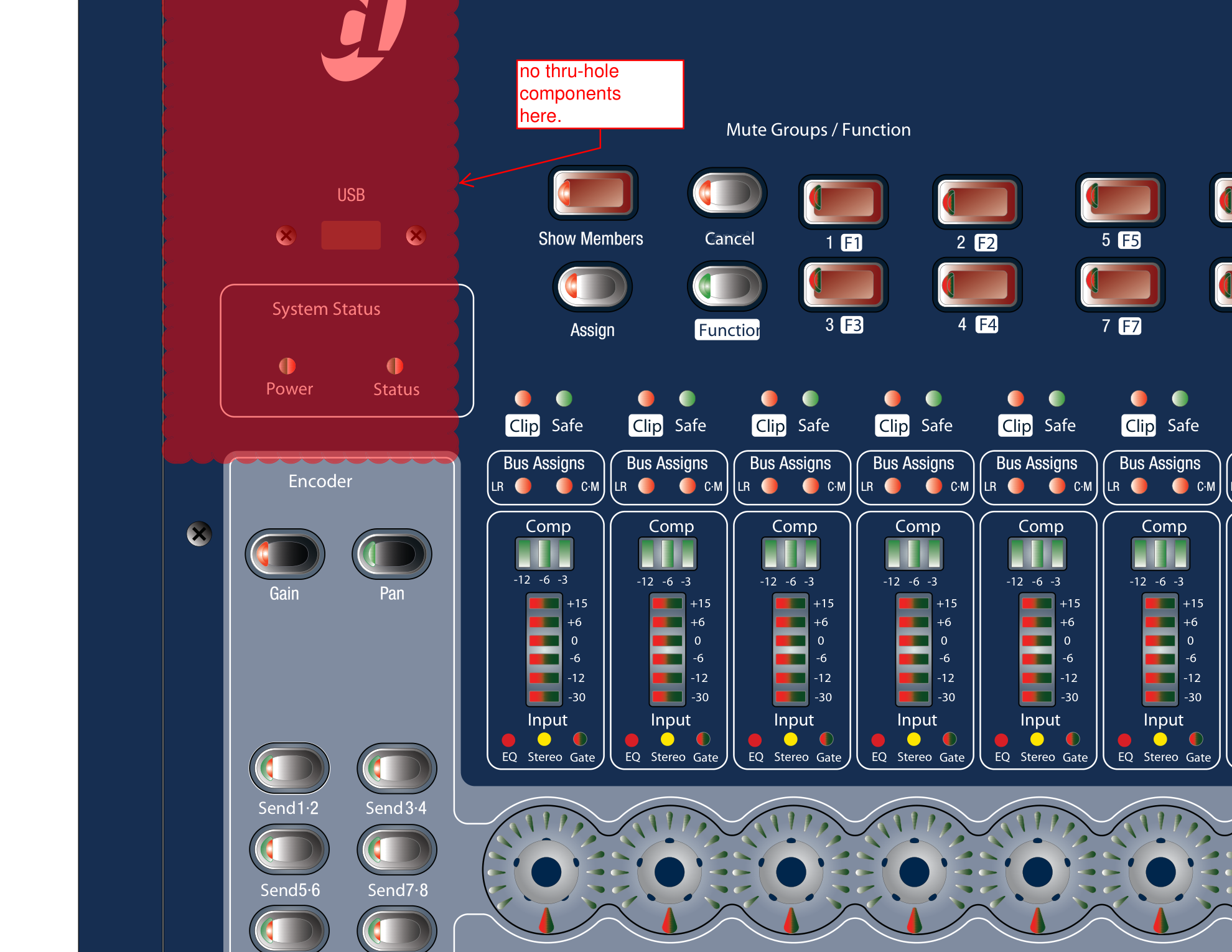
The control surface governed more than appearance. A January keepout overlay prohibited through-hole components beneath a marked region. Later that month, control-surface PCB drawing work was waiting for the final surface arrangement. This is the physical dependency that made layout coordination necessary, not evidence of a collision in a built unit.
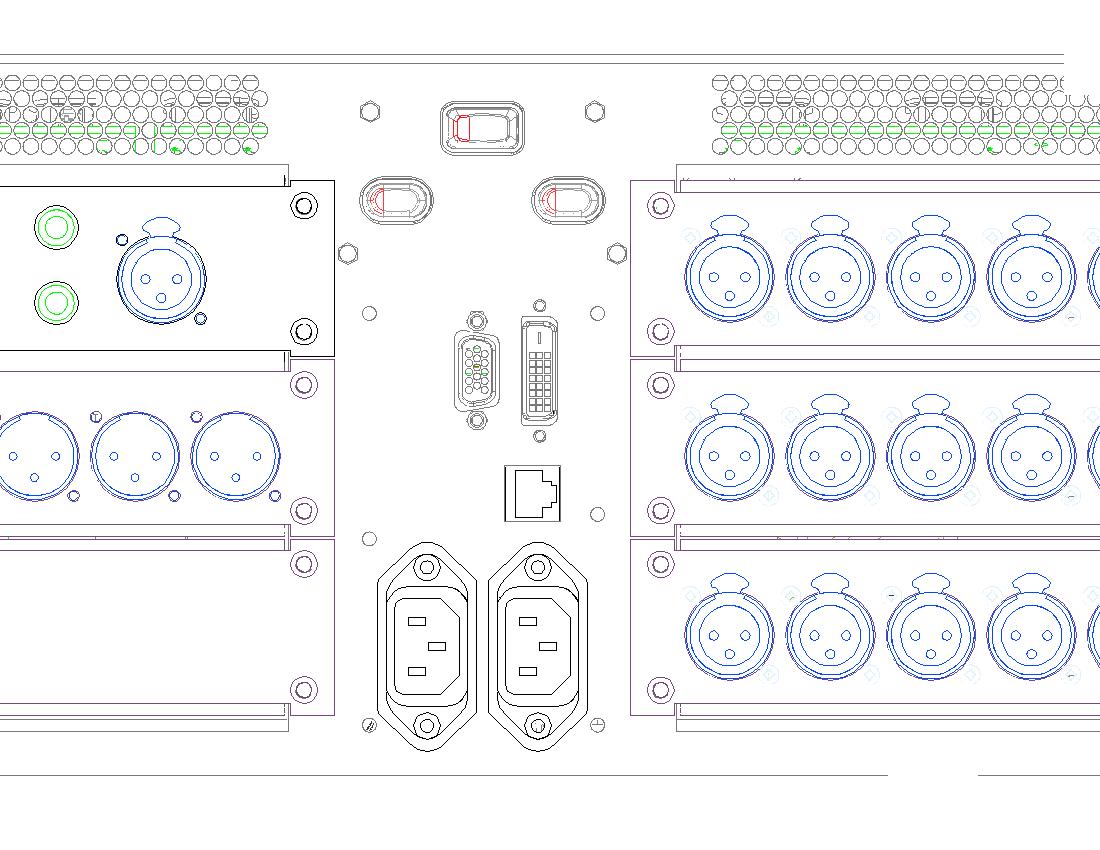
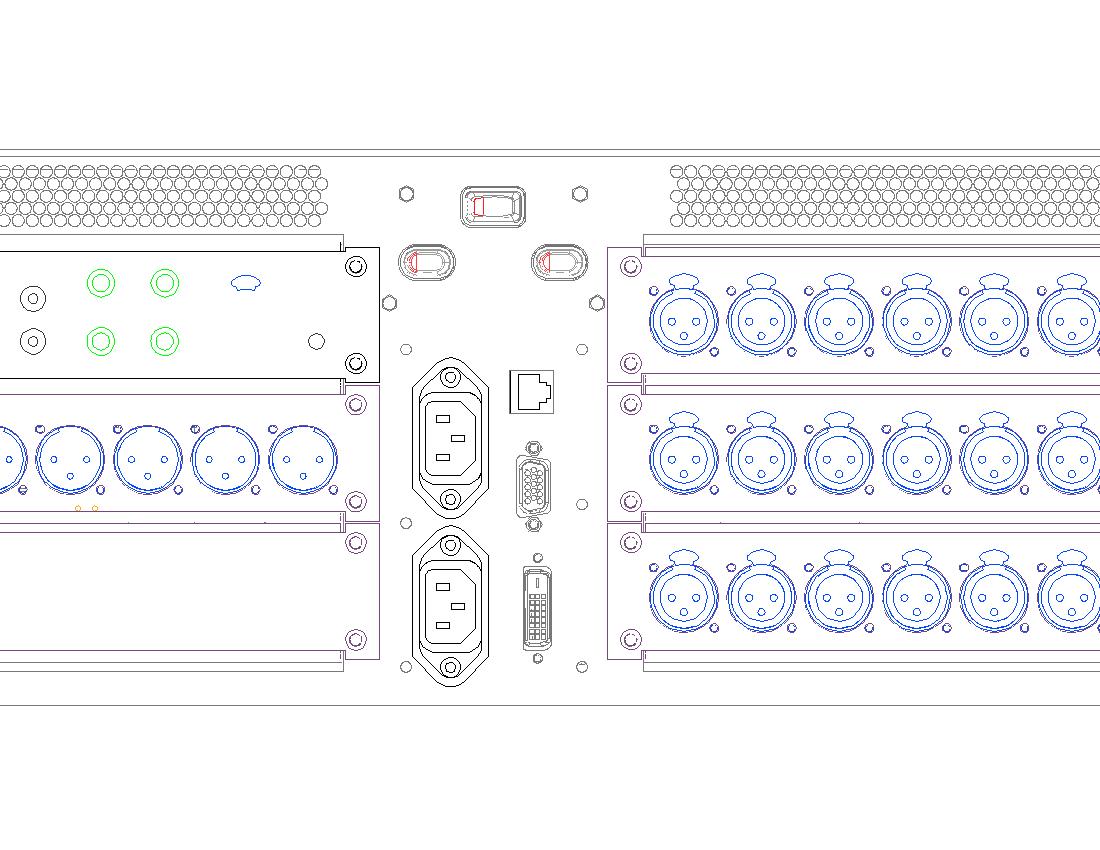
At the back, power and computer connections occupied the space between the audio I/O banks. The retained layout views show two power inlets side by side in one arrangement and stacked in others, with computer connections in the same central zone and ventilation above. These views make the rear-panel packaging problem visible; they do not establish which arrangement was manufactured.
By February, I was incorporating revised artwork into CAD, equalizing top-panel margins and printing the layout at full scale for Product Marketing. Work with the electronics team aligned board outlines, connector locations and controls. The initial PCI-extender DCD had already gone to Portwell in December; the main-left and main-right board documents followed in February.
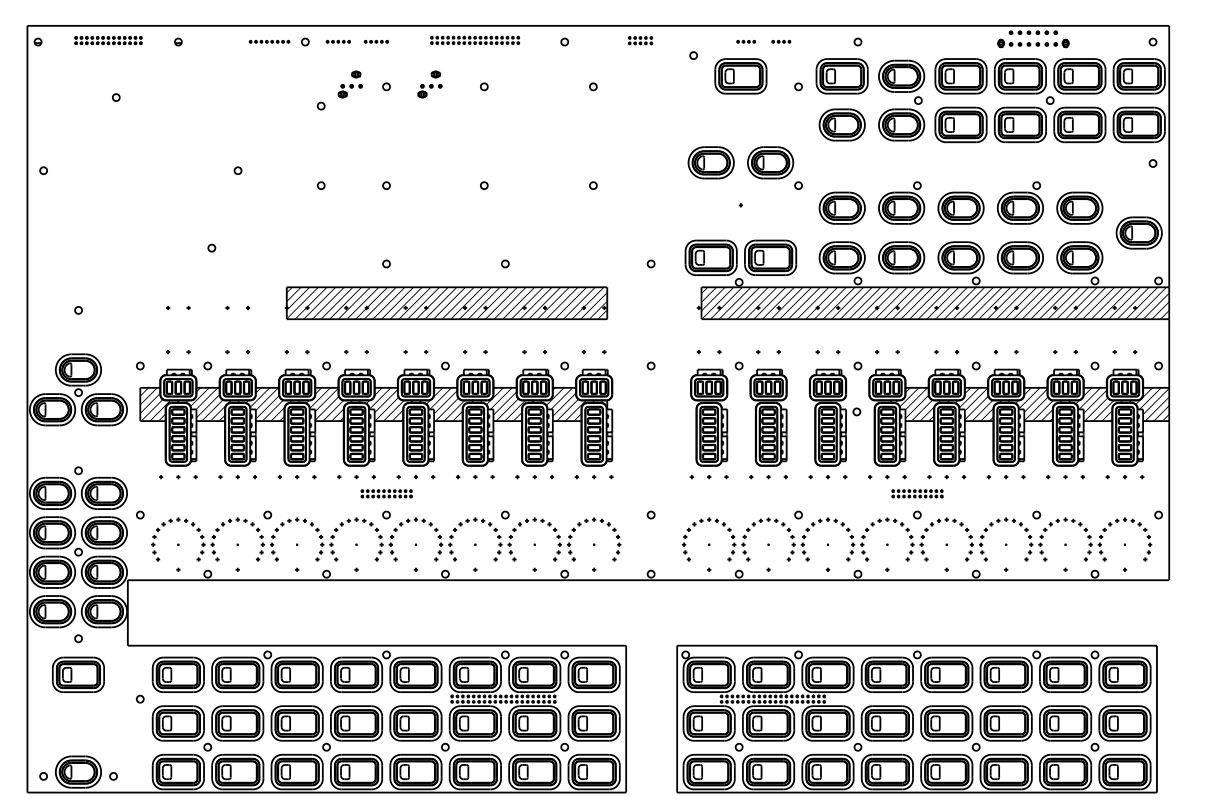
The interface work extended beyond the two main control-surface boards. A main-I/O drawing was already marked for review in October 2007. In April, a power/reset drawing relocated the buttons and added a 26-pin header. These are interface-document changes; the inspected records do not establish which revisions reached manufactured hardware.
Their revision tables show the interface work continuing. Main-left updates followed artwork and layout, deleted a mounting hole, moved a 10-pin connector and moved three mounting holes by April 7. The video-board drawing records a connector-placement update on April 8. Main-right was updated to match layout on April 10. Those are dated drawing actions, not evidence of final system release or my personal handoff date. They show how changes at the surface and connector interfaces reached the controlled mechanical definition.
Clearance beneath the control surface
January 2008 keepout overlay. The marked region explicitly excludes through-hole components. It is a design constraint on the illustrated layout, not evidence of an assembled collision.
Main-left board interface
Plan-view crop from DCD-9150-58331-00 Rev 6, main-left Lux PCB. The source drawing is prepared and checked EN; its revision history runs through April 7, 2008. The view locates control and mounting interfaces; it is not a circuit schematic.
Rear-interface packaging alternatives
Rear-interface layout views retained with the 9100-58341-00 family. One view places the power inlets side by side; the other stacks them beside computer connectors. These views have no visible dated revision history. They illustrate different arrangements, not a verified order of development or final production layout.
Plastics, access and manufacturing definition
The outer parts developed alongside the internal interfaces. Three plastic directions were presented for review; the selected direction used left and right side covers and a front bolster without a rear trim piece. Work continued on the ACS encoder ring, the mouse-tray slot in the side cover and the relationship between the bolster and CD drive.
March reports preserve the alternatives rather than compressing them into one finished design. Full-size and slimline-CD bolsters were prepared for SLA evaluation. A second encoder design was completed and a third developed. By late March, the third encoder version had gone to quotation and prototype work, and the slimline CD had been selected for further detailing. The component renders show those part families, while exact revision and finished appearance need their own evidence.
The no-extrusion assumption directed the structure toward fabricated metal. A prototype 4U rake-back I-beam drawing defines a folded, perforated section with a 1.5 mm material note; it is marked prototype, prepared by pd and checked by en. That record explains a structural approach without turning every drawing into my work or a prototype into the shipped chassis.
Cost models and quotes supported this definition work. The sheet-metal piece-part model totals $521.46 plus $40 contingency, $561.46 in all. It is a model, not achieved system COGS. CNC and hard-tool scenarios remain separate, and the Profile benchmark’s extrusion category is not a demonstrated SC48 saving. Supplier feedback and successive quotes informed detailing without establishing a final supplier/process outcome from quotation paperwork alone.
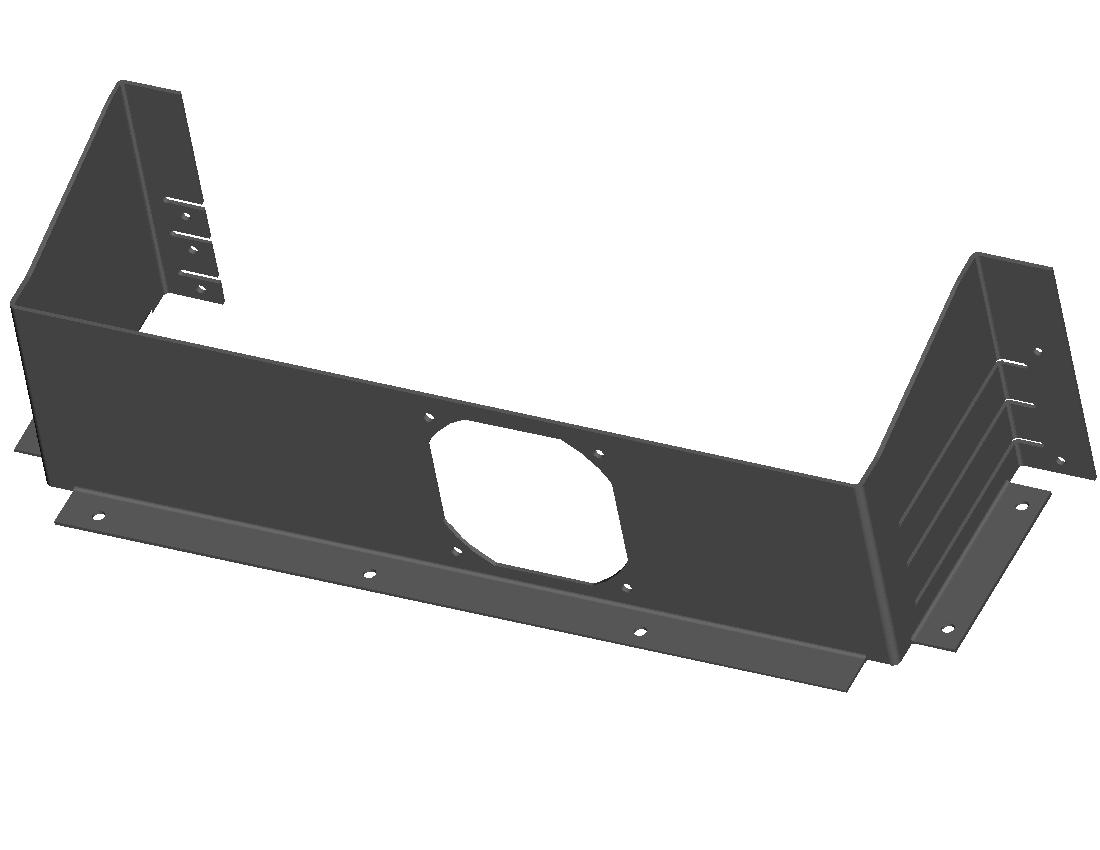
Compact PCI frame
P/N 9420-58318-00 as represented in the component visual index and cost record. This compact folded frame differs from the full-width prototype back-panel drawing bearing the same part number. No exact assembly revision is inferred.
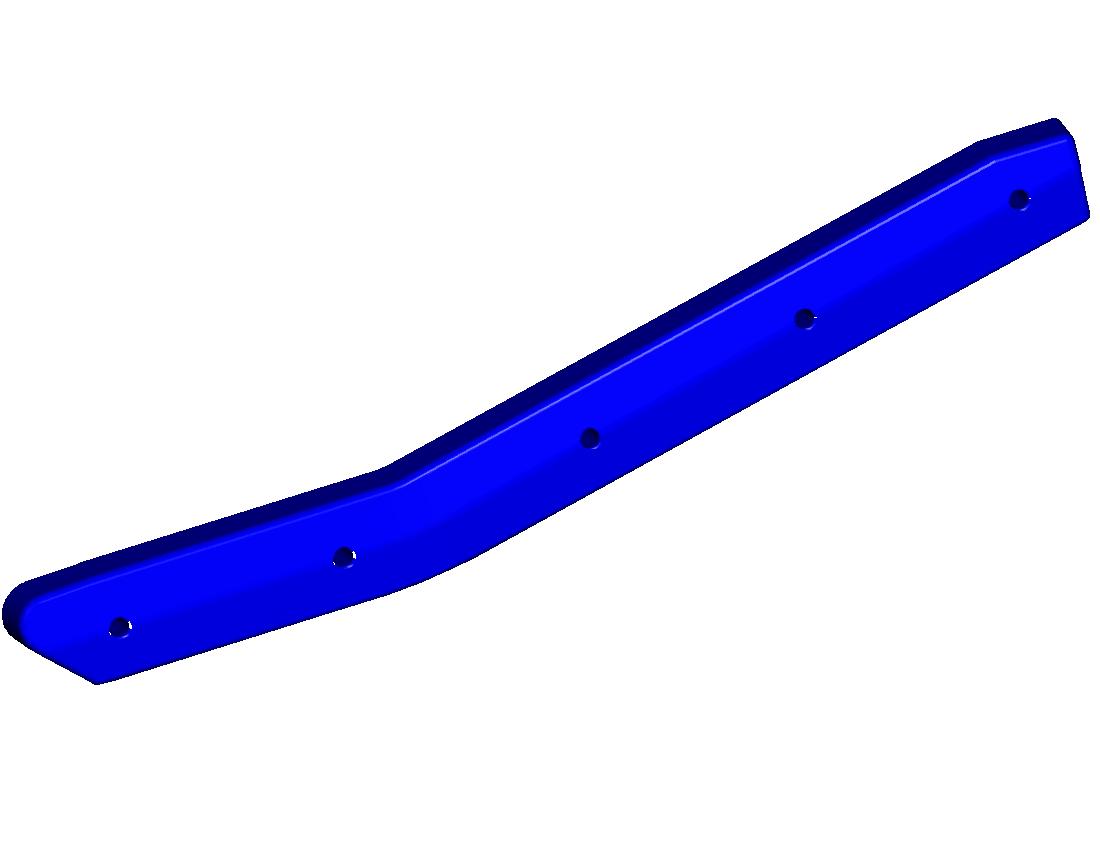
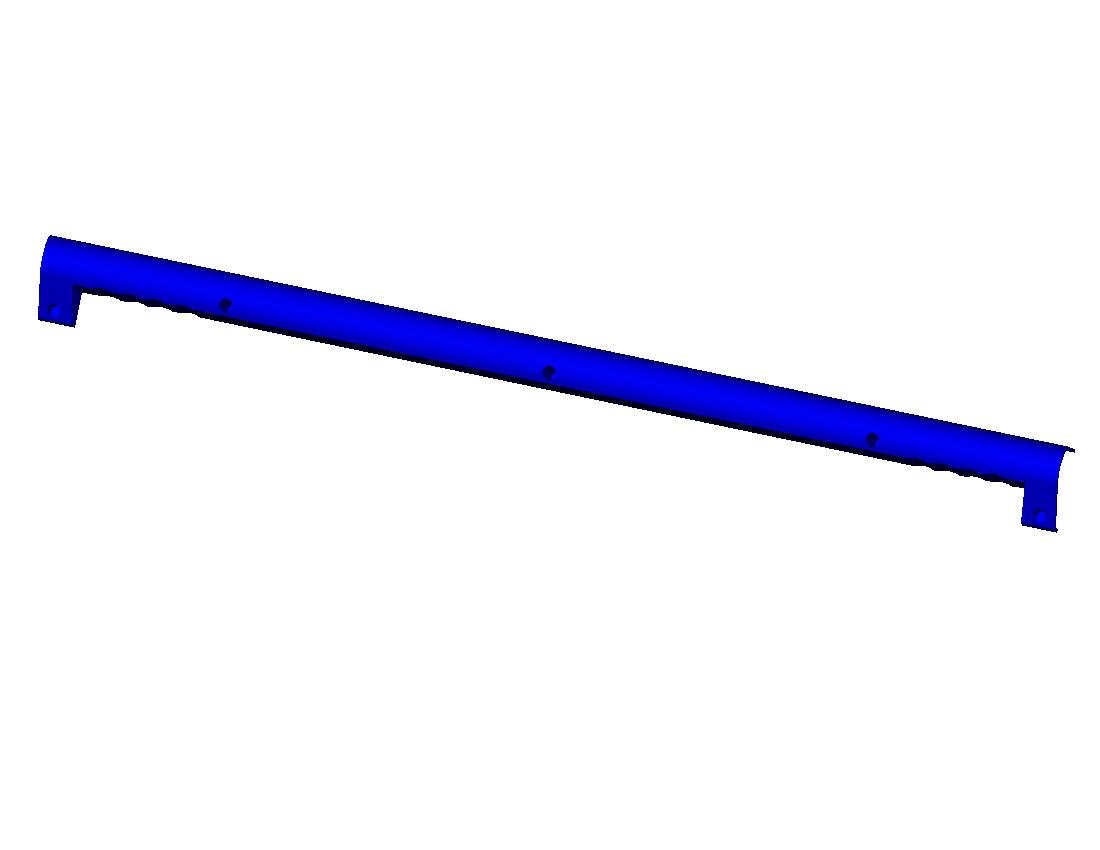
Right side cover and front bolster
Component renders identified by the part ledger: right side cover 9440-58842-00 and front bolster 9440-58843-00. Blue is the render appearance; these views do not establish a production finish or the selected CD-drive revision.
The contribution
The documented contribution spans enclosure and cooling studies, mechanical/electrical interface control, control-surface and plastic development, and fabrication definition. The clearest result is a connected engineering record: test arrangements informed packaging choices, physical constraints reached the board layouts, and changing controls and component interfaces were carried into successive drawings and supplier packages.
The product shipped. Once Arndt and manufacturing had it handled, I moved on to other work at Digidesign. The exact handoff date and final internal hardware revisions remain unclaimed.
Development chronology - working selection
-
The integrated-console requirement
Requirements preferred processing and I/O in the console, with a rack alternative if needed. Cost, size and reliability values are targets, not measured outcomes.
Product requirements; not an Erik start-date or sole-author record.
Read this phase ↓ -
High reuse made packaging the integration problem
The preliminary plan couples a Mini-ITX host and PCI extender to reused mix engines, Hub48 and I/O. Top-surface boards were still poorly defined.
Architecture team; reused electronics not attributed to Erik.
Read this phase ↓ -
Main-I/O interface prepared for review
The main-I/O assembly drawing DCD-9150-58340-00 carries a FOR REVIEW revision. It records an early connector/board interface state before the selected thermal-trial sequence.
EN recorded in prepared/checked or revision approval fields; bounded mechanical/electrical interface documentation, with electronic design shared. Drawing record only; no manufactured board, product release, circuit-design ownership or personal handoff inferred.
Read this phase ↓ -
Prototype folded structure
The prototype 4U rake-back I-beam drawing defines a folded and perforated section; its prototype state and prepared pd / checked en credit remain explicit.
Prepared pd; checked en; names not expanded from initials.
Read this phase ↓ -
Plenum geometry, cabling, vents and fan voltage
Run notes change plenum tilt, taped openings, cable position and ADC venting. These are interdependent interventions, not isolated fan-voltage trials.
SC48 engineering test record; workbook operator not established.
Read this phase ↓ -
4U work continued while 3U was still planned
Weekly wording calls the 4U rake configuration fully qualified with problems identified and mostly solved, while planning 3U qualification. Later reports qualify what this statement can mean.
Shared thermal engineering; reporting is not complete product qualification.
Read this phase ↓ -
Inlet changes and larger-fan trials
Side-inlet changes and 120 mm fan trials followed at several voltages. Hardware monitoring was named in later files.
SC48 engineering test record; workbook operator not established.
Read this phase ↓ -
Thermal and acoustic success did not close EM
One 80 mm plus one 120 mm 4U arrangement was reported thermally and acoustically OK. Preliminary EM testing found significant noise with PS under ADCs and required more sheet metal for continued testing.
Erik Norris with Digidesign engineering, validation and sourcing.
Read this phase ↓ -
3U crossflow, filters and side covers
Two-in/two-out fan trials included filters and side covers. The 12-5c header records voltage change at 4500 s and vents at 6500 s but contradicts itself on side-cover presence.
SC48 engineering test record; workbook operator not established.
Read this phase ↓ -
Three-fan front-to-back trials
Three internal fans were evaluated front-to-back at 12 V and 8.5 V; one header records changing to 8.5 V at 3800 s.
SC48 engineering test record; workbook operator not established.
Read this phase ↓ -
Hybrid trials retain within-run changes
The hybrid run records 8.5 V then 12 V at 3000 s. Other large channel transitions remain unattributed; summary rows sample different moments in the same run.
SC48 engineering test record; workbook operator not established.
Read this phase ↓ -
3U and hybrid reopened the packaging choice
Crossflow worked without filter/sidecap and failed with them. Three-fan front-to-back worked at 12 V and 8.5 V; EM looked better and acoustic verification remained due. A 3U-back/4U-front hybrid was built and looked promising.
Erik Norris with Digidesign engineering, validation and sourcing.
Read this phase ↓ -
PCI extension required a physical interface
Meeting with Portwell led to preliminary PCI-extender PCB drawings, with delivery still planned.
Erik Norris with Digidesign engineering, validation and sourcing.
Read this phase ↓ -
PCI-extender preliminary drawing
The PCI-extender drawing 9150-58330-00 records PRELIMINARY RELEASE on December 18. The existing December 21 weekly report separately records issue to Portwell.
EN recorded in prepared/checked or revision approval fields; bounded mechanical/electrical interface documentation, with electronic design shared. Drawing record only; no manufactured board, product release, circuit-design ownership or personal handoff inferred.
Read this phase ↓ -
The PCI-extender DCD was issued
Initial PCI-extender DCD was released to Portwell; three plastic scenarios were beginning and test data was presented to a strategy committee.
Erik Norris with Digidesign engineering, validation and sourcing.
Read this phase ↓ -
A keepout constrained control-surface placement
The overlay prohibits through-hole components in a marked region. It demonstrates an interface constraint, not an observed assembled collision.
Mechanical/electrical interface coordination.
Read this phase ↓ -
Three plastic directions narrowed to one
Three plastic scenarios were presented to Sheldon; the direction derived from Capaldi used left/right sidecaps and a bolster without rear trim. ACS encoder and DCD development continued.
Erik Norris with Digidesign engineering, validation and sourcing.
Read this phase ↓ -
Board outlines waited on the surface layout
DCD work reached a dependency on final control-surface layout. Plastic detailing continued while interface definition waited.
Erik Norris with Digidesign engineering, validation and sourcing.
Read this phase ↓ -
PCI-extender outline change proposed
Revision 2 of 9150-58330-00 explicitly proposes a PCB outline change. The different outline is visible in the paired drawings; the proposal is not proof that a manufactured board adopted it.
EN recorded in prepared/checked or revision approval fields; bounded mechanical/electrical interface documentation, with electronic design shared. Drawing record only; no manufactured board, product release, circuit-design ownership or personal handoff inferred.
Read this phase ↓ -
Air inlet and accessory interfaces developed together
Filter, TFT mount and accessory tray were further defined; encoder lightpipe and mouse-tray inputs remained open.
Erik Norris with Digidesign engineering, validation and sourcing.
Read this phase ↓ -
Ducts and filters moved to quotation
Fan-duct/filter documentation went out for quote, sheet-metal documentation began, CoGs advanced through Rev 3 and the 9100-level assembly was checked into Intralink.
Erik Norris with Digidesign engineering, validation and sourcing.
Read this phase ↓ -
Near release still contained major interface questions
Revised artwork was incorporated. Board outlines, motherboard/CPU duct, lightpipe, mouse tray, CD and other interfaces remained active; metal package was delivered to Terri for quotes.
Erik Norris with Digidesign engineering, validation and sourcing.
Read this phase ↓ -
A full-scale layout connected CAD to product review
Top-panel margins were equalized, a 1:1 layout was printed for Product Marketing, and DCD issue awaited layout approval. A duct/filter kit quote and corrected metal package were recorded.
Erik Norris with Digidesign engineering, validation and sourcing.
Read this phase ↓ -
Main-left DCD initial release
Main-left interface drawing records initial release. Later revisions show why this was the start of controlled iteration.
Prepared/check EN in drawing; electronics design remains shared.
Read this phase ↓ -
Encoder approval remained preliminary
Main-left and main-right Rev 1 DCDs were reported released. ACS encoder had preliminary approval, with a working demo with David A. planned and an alternate sketch from Sheldon.
Erik Norris with Digidesign engineering, validation and sourcing.
Read this phase ↓ -
Main-right controls and mounting revised
The main-right revision 2 entry relocates two mounting holes and adds LEDs and an encoder. Later artwork/layout updates remain separately dated in the same table.
EN recorded in prepared/checked or revision approval fields; bounded mechanical/electrical interface documentation, with electronic design shared. Drawing record only; no manufactured board, product release, circuit-design ownership or personal handoff inferred.
Read this phase ↓ -
Crosshairs added to interface drawing
Main-left Rev 2 added crosshairs; this is a drawing update, not a circuit redesign.
Prepared/check EN; bounded mechanical interface role.
Read this phase ↓ -
Two bolster concepts supported the CD decision
Full-size and slimline-CD bolsters were prepared for SLA evaluation. Second encoder design and sidecap mouse-tray slot progressed; three of seven metal quotes were reported received.
Erik Norris with Digidesign engineering, validation and sourcing.
Read this phase ↓ -
A third encoder design followed
The second encoder version was finished and a third begun; both CD/bolster alternatives and mouse-tray slot still progressed. Six of seven metal quotes were reported received.
Erik Norris with Digidesign engineering, validation and sourcing.
Read this phase ↓ -
Board drawing followed artwork placement
Main-left Rev 3 updated to match artwork placement.
Prepared/check EN; no attribution of electronic circuit design.
Read this phase ↓ -
Board drawing followed layout placement
Main-left Rev 4 updated to match layout placement.
Prepared/check EN; no attribution of electronic circuit design.
Read this phase ↓ -
Encoder quotation and slimline-CD selection
Third encoder version went to quote/prototype; slimline CD was selected for further design. Main-I/O layout Rev 2 and Ping feedback into metal were recorded.
Erik Norris with Digidesign engineering, validation and sourcing.
Read this phase ↓ -
Mounting and connector interfaces changed
Main-left Rev 5 deletes a mounting hole and moves the 10-pin connector. The table does not establish a field failure or production recall.
Prepared/check EN; mechanical/electrical interface coordination.
Read this phase ↓ -
Main-I/O connector placement updated
DCD-9150-58418-00 revision 4 records updated connector placement. Its earlier history rows are blank; no renumbering relationship to the October 58340 drawing is assumed.
EN recorded in prepared/checked or revision approval fields; bounded mechanical/electrical interface documentation, with electronic design shared. Drawing record only; no manufactured board, product release, circuit-design ownership or personal handoff inferred.
Read this phase ↓ -
Power/reset buttons and header revised
The power/reset drawing DCD-9150-58334-00 records an April 1 initial revision and an April 3 revision relocating buttons and adding a 26-pin header. This is distinct from the video drawing identifier with the _B suffix.
EN recorded in prepared/checked or revision approval fields; bounded mechanical/electrical interface documentation, with electronic design shared. Drawing record only; no manufactured board, product release, circuit-design ownership or personal handoff inferred.
Read this phase ↓ -
Three mounting holes moved
Main-left Rev 6 moves three mounting holes by the literal table note .070. No unit interpretation is added from the revision note alone.
Prepared/check EN; mechanical interface definition.
Read this phase ↓ -
Video-board connectors continued to move
Video-board DCD-9150-58334-00_B Rev 5 updated connector placement after April 7. Earlier April 7 table entries modified the PCB outline and added stacking VGA/DVI, then updated placement. This extends the documented interface work beyond the previously selected main-left record.
Prepared/check EN; mechanical/electrical connector interface, not circuit-design attribution. The drawing and model identifiers conflict; no part-number crosswalk is inferred.
Read this phase ↓ -
Main-right interface followed the layout
Main-right DCD-9150-58333-00 Rev 4 updated to match layout. Earlier revisions moved mounting holes and added LEDs/encoder, then followed artwork. The documented design sequence therefore continues at least through April 10, not just the main-left April 7 entry.
Prepared/check EN; bounded interface definition role.
Read this phase ↓