The Challenge
Context: Before the Mbox, “Pro Tools” meant a $10,000 TDM system in a studio. We wanted to put that power in a backpack for $495.
The Mbox was the hardware key to the Pro Tools kingdom.
- USB Power: Dealing with the noisy, limited power budget of USB 1.1 (500mA) while driving 48V phantom power micro-pres was an analog engineering marvel.
- Robustness: These things lived in tour bus bunks and dorm rooms. They had to be practically indestructible.
Engineering Approach
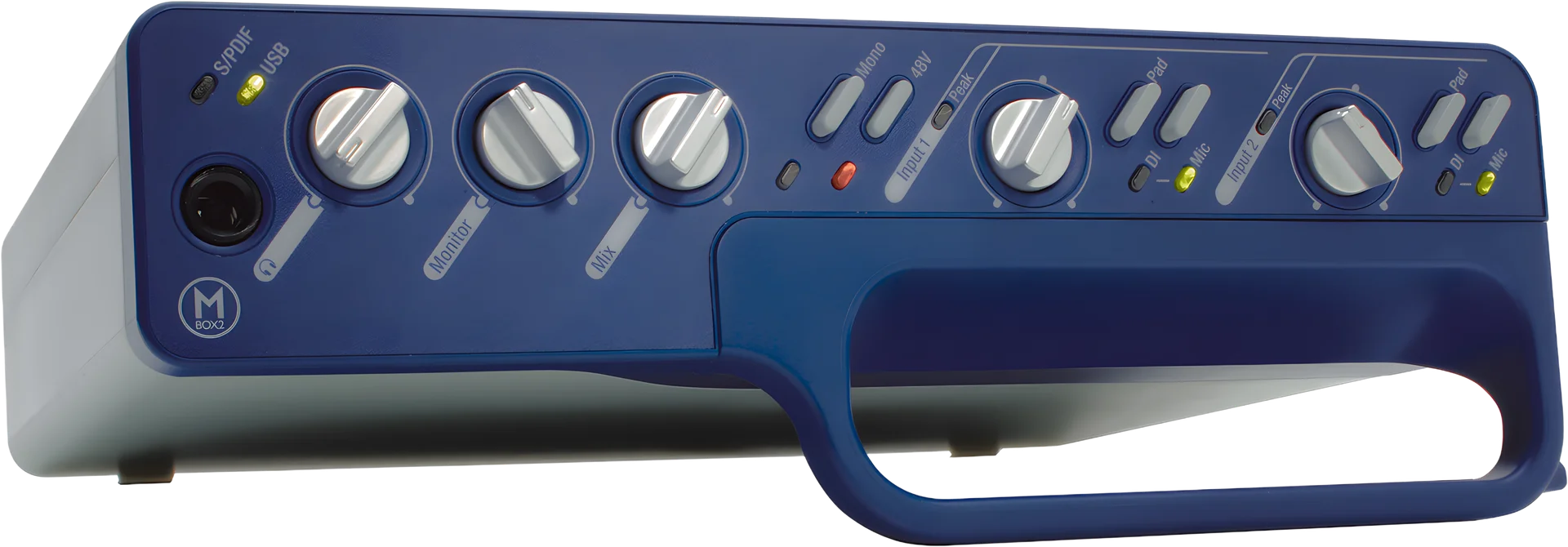
I worked on the mechanical design of the Mbox 2, Mini, and Micro.
- The Handle: The Mbox 2’s signature handle wasn’t just aesthetic; it acted as a roll-cage, protecting the knobs if the unit was dropped face-down.
- EMI: Housing sensitive pre-amps next to high-speed digital logic in a plastic box required a custom stamped sheet metal “coffin” internally to isolate the noise floor.
Impact
It launched the “Bedroom Producer” revolution.
- Legacy: The design language I established defined the brand for a decade.
Project Artifacts
:::note[Specs]
- Bus: USB 1.1 / 2.0
- Audio: 24-bit / 48kHz
- Preamps: Focusrite (Gen 1) :::